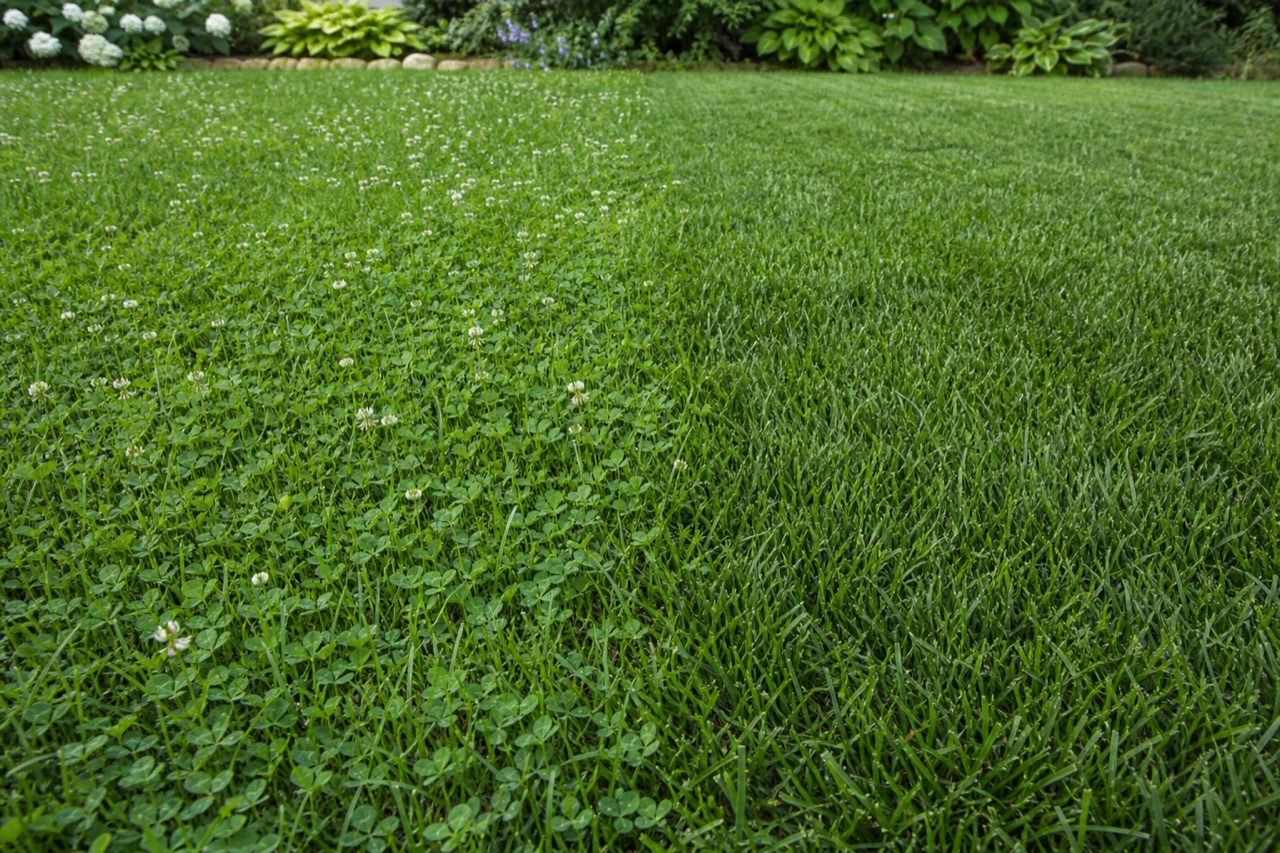
Clover lawn vs grass: the quick answer
Choose turfgrass for a hard-used play area, a dog run, or a front lawn that must stay uniform. Perennial turfgrasses are bred to hold up under regular foot traffic. Clover tolerates some walking, but university Extension sources caution against using it for heavy traffic. Wet clover can also feel slippery.
Try a clover-and-grass mix in a sunny, lighter-use patch when you accept flowers, bees, and hand weeding. Clover fixes nitrogen through bacteria at its roots and can support neighboring grass. A mixed lawn is usually a safer first move than replacing the whole yard with pure clover.
Do not choose clover only because a seed seller promises a drought-proof or dog-proof lawn. Water use changes with climate, soil, grass species, and establishment. University of Maine Extension found no strong evidence for the common claim that clover resists dog-urine damage.
| Decision factor | Turfgrass | Clover-dominant | Clover + grass mix |
|---|---|---|---|
| Daily foot traffic | Best fit of these three | Better for light use | Depends on grass share and wear |
| Nitrogen | Follow a soil test and local turf guidance | Fixes its own nitrogen | Clover can feed some nitrogen into the stand |
| Water | Varies widely by grass and climate | Not a guaranteed water saver | Still needs watering during establishment |
| Broadleaf weeds | More selective control options | Common lawn herbicides can injure clover | Hand weeding best protects the clover |
| Pollinators | Few flowers in a conventional lawn | Flowers attract bees | Attracts bees when clover flowers |
| Look | Most uniform | Can spread, flower, and look patchy | Blended texture that changes by season |
Original field worksheet · copy into your notes
Will clover fix this bare patch? Check the site first
Not if the same problem will damage the next planting. A shortcut to the gate, persistent puddle, or deeply shaded corner needs a site decision before a seed decision. Brown grass is not automatically dead grass, and a photograph alone cannot identify every cause.
Choose one failed patch and one nearby healthy patch. Give each a name on a phone photo. Record the same observations in both places; do not compare a sunny front lawn with a shaded back corner and call the seed the only difference. This worksheet organizes observations, not a laboratory diagnosis.
1. Map the job
Measure length and width in feet. Mark the gate route, play space, dog turns, and places where furniture sits. Observe a normal busy day, not just a quiet morning.
Patch / size / repeated traffic:Decision: if a route cannot rest during establishment, postpone seeding there. A planned walking surface may fit better than another lawn trial.
2. Record light, with a date
Note when direct sunlight reaches and leaves the patch on a representative day. Record whether trees have leaves. A winter sun record does not describe summer shade.
Date / direct sun periods / tree canopy:Decision: ask local Extension about a suitable lawn or groundcover for those conditions. Do not assume clover solves deep shade.
3. Watch water arrive and leave
After rain or normal irrigation, note puddles, roof runoff, missed sprinkler areas, and when the surface stops looking wet. Record the weather; one dry day cannot rule out drainage trouble.
Water source / wet areas / follow-up time:Decision: investigate repeated ponding before adding seed. Use the one-storm drainage record; do not redirect water toward a house or neighbor.
4. Separate soil questions
Record recent construction, heavy use, fertilizer, weed treatment, and pet activity. Ask a local soil-testing service about sampling for pH and nutrients. Keep unusual problem areas separate if its sampling instructions require it.
History / lab question / next check:Decision: do not add lime or fertilizer simply because the patch looks poor. Laboratory recommendations address measured soil chemistry, not every physical constraint.
Your next action: write one of these in your notes: “repair the site,” “identify the damage,” “keep a traffic surface,” or “trial a locally suitable mix.” Add a reason and a follow-up date. Leave the seed purchase blank until that decision is clear.
Make the trial answer one question
If the site fits, use the plot calculator to size a small area that you can water and protect. Record the exact seed label, sowing date, preparation, and watering method. Keep a nearby comparison area under its normal care. Choose one practical goal beforehand: better cover in a lightly used patch, acceptable appearance with flowers, or a mowing routine you can maintain.
Take repeat photos from the same spot and note bare ground, weed pressure, maintenance time, and use after establishment. Review through the locally relevant growing season rather than declaring success from germination alone. A protected trial does not establish that the mix will survive a dog run. If you cannot keep either patch under comparable conditions, treat the result as a personal observation, not proof that one seed is superior.
In a clover mix, decide which plants you intend to keep before treating “weeds.” A broadleaf lawn treatment can also damage desired clover. For scattered unwanted plants, see the small-area tool trial before choosing equipment.
Technical basis: University of Maryland Extension on environmental lawn damage and University of Minnesota soil laboratory services. The paired-patch record is our planning aid, not an Extension trial protocol.
Pick the lawn by how you use the ground
Stay with grass
Choose turf when children play there daily, dogs run the same route, or you want a consistent surface and conventional weed-control options.
Test a mixed lawn
Overseed one lighter-use area when you like a softer, less uniform look and are willing to protect clover while managing other broadleaf weeds.
Skip lawn altogether
Use a path, mulch, or a locally suitable groundcover where shade, standing water, steep grade, or repeated wear keeps defeating both grass and clover.
Check these six limits before you buy seed
- Traffic: mark the worn path between the door, gate, play set, and shed. Keep the hardest-used route in turf or a firm path.
- Sun: record direct sun for one normal day. Clover performance changes by region, and one Extension guide recommends at least a half day of sun for its local conditions.
- Water: make sure a new plot can stay evenly moist during establishment. A mature lawn claim does not remove the need to water new seed.
- Weeds: decide whether you can hand-pull unwanted broadleaf plants. Products made to kill clover cannot distinguish it from the clover you want to keep.
- Bare feet: flowering clover attracts bees. That can be welcome beside a garden and a poor fit beside a barefoot play area.
- Rules and spread: check HOA or local rules and leave a buffer from beds where self-seeding or runners would create extra work.
Before buying the bag
Is this patch ready for clover seed?
Buy only after the seed identity, treatment history and establishment plan agree. A bare patch is a site problem first. An established lawn also has competition: seed scattered into dense turf may not reach soil or establish. Do not strip a healthy lawn simply to copy a seller's pure-clover photo.
Seed identity is unclear
Get a readable current label showing the species, any named cultivar, lot and test information. A front-of-bag word such as “mini” does not answer all of those questions.
Hold the purchase: ask the seller for the label rather than guessing from a photograph.
Recent weed treatment
Find the exact product label and application record. Check its restrictions for the intended planting. Re-entry, rainfastness, reseeding and treatment of new seedlings are different instructions.
Hold the seed: do not reverse a “wait after seeding” instruction into a “seed after spraying” interval.
Dense turf or an unresolved patch
Use the site record to decide whether this is overseeding, bare-ground establishment or repair. The preparation and coverage directions may differ.
Change the plan: ask local Extension about the existing grass and a small trial, not a whole-yard reset.
No watering or protection plan
Check that you can reach the entire patch and keep traffic off during establishment. A mature plant's drought claim does not describe new seedlings.
Postpone: choose a locally suitable planting window when care is practical. More seed will not compensate for missed care.
Read the seed label as a plan, not a price per bag
Record the botanical name and any named cultivar, not just the trade name. White clover is Trifolium repens; microclover refers to dwarf cultivars of that species. Other clovers sold for pasture or seasonal cover crops are not automatic substitutes for a lawn trial.
Compare like uses: existing-lawn overseeding with existing-lawn overseeding, or bare-ground establishment with bare-ground establishment. Save the exact rate and units. If the package lists coating or other non-seed material, do not assume every ounce is seed. Ask how its stated coverage applies to that packaged product instead of adjusting the rate yourself.
The seed test date and germination figure describe a lot under stated testing conditions; they do not promise that the same share of your lawn will establish. Keep the lot label with your notes. For a grass-clover mixture, record its components rather than treating the mixture name as a species.
Resolve old treatment records before choosing a date
A forum's waiting period for a brand name is not enough. Find the exact formulation, EPA registration number if applicable, application date and restrictions on the container label. Weed-and-feed and pre-emergent products also belong in the history. If a previous owner treated the area and details are missing, keep that uncertainty visible.
Ask the manufacturer or local Extension to interpret unclear restrictions for the intended clover and turf planting. Do not invent a universal number of days, add another application to “reset” the clock, or assume that access by people or pets means seed can be planted. This page does not prescribe a pesticide or dose.
Original seed-to-site purchase card
Fill one card for one patch and one candidate product. Leave unknowns blank and resolve them before buying. Fields stay on this page without upload or automatic saving; copy them into your own notes.
One missing answer can change the purchase
Example: a 200-square-foot patch and a package claiming 1,000-square-foot coverage appear to require one bag. But if that coverage is for the wrong starting surface, or the previous treatment is unknown, the bag calculation does not establish readiness. Resolve those questions first, then use the area calculator with the correct label coverage. This is an invented decision example, not a seed trial.
For scattered unwanted plants, compare the small-area weed-removal options without assuming the desired clover must go. For repeated traffic, keep a usable route and review other ways to reduce yard work.
Basis: Maryland Extension on microclover's regional limits and interpreting seed labels; EPA on reading the exact pesticide label. The purchase card is our planning format, not a germination guarantee or pesticide clearance.
Test before replacing turf
Size a small clover test plot
Enter one low-risk rectangle and the coverage printed on the seed package. The result estimates area and package count. It does not choose a seeding rate; overseeding and bare-soil rates can differ.
A low-risk way to try clover
- Choose a visible, lighter-use patch rather than the whole yard.
- Measure the area and note sun, drainage, irrigation reach, and traffic.
- Ask your local Extension office which clover and turf species fit your region.
- Test the soil instead of assuming thin grass means the seed is wrong.
- Use the product label's rate for overseeding or bare soil. Do not substitute a rate from a different seed type.
- Keep the seedbed moist during establishment and keep people and pets off it until the stand is rooted.
- Watch the plot through heat, rain, mowing, and normal use before expanding it.
What microclover changes, and what it does not
Microclover is a smaller-leaved form of white clover. It can look neater beside turf, but it does not stay tiny without mowing. It is still a flowering broadleaf plant, still affects weed-control choices, and still costs more than ordinary Dutch white clover in the Extension examples we reviewed.
Compare the seed type, germination information, inoculation details, lot date, local suitability, and two separate coverage rates: one for adding clover to existing turf and one for starting on bare soil. A large bag is not a better value if its species or rate does not fit the test plot.
Only after the plot fits
Compare the minimum setup
These links open broad product searches, not hands-on test winners. Check the current label, seller, seed species, coverage, and return terms before buying.
Main item
Clover lawn seed
Match the species, lot label and correct overseeding or bare-ground coverage to the purchase card. Buy only the amount needed for a locally suitable trial; skip listings that cannot supply a readable seed label.
Diagnose first
Soil test kit
Start with your local Extension soil-testing service for pH and nutrient recommendations. If comparing a kit, check which laboratory measurements it includes. A soil test does not measure foot traffic, sunlight, or drainage and cannot by itself diagnose compaction.
For a measured patch
Hand spreader
A small hand spreader may help with even coverage. Skip it when a cup and careful cross-pattern are enough for the test area.
Only if water misses the plot
Adjustable lawn sprinkler
Compare a small adjustable pattern when the hose or watering can cannot keep the seedbed evenly moist. Skip it when the existing setup reaches.
Affiliate links. As an Amazon Associate I earn from qualifying purchases.
Do not buy these by default
- A full-yard quantity of seed: one season in a small test plot tells you more than a seller's lawn photo.
- Weed-and-feed for a clover mix: broadleaf herbicides may injure or remove the clover you are trying to keep.
- A large broadcast spreader: it adds storage and cleanup for a job a small hand tool may handle.
- Extra fertilizer without a soil test: clover competes well in low-nitrogen ground, while the grass component may have different needs.
Questions homeowners usually ask
Does a clover lawn use less water than grass?
Sometimes, but not as a universal rule. University of Maine Extension describes clover as more drought tolerant than many grasses in its cooler conditions. Colorado and Wyoming Extension guidance cautions that clover is not automatically drought resistant and may use a similar amount of water to Kentucky bluegrass. Use local guidance for your climate and grass species.
Can dogs use a clover lawn?
Occasional traffic may be fine. Repeated running on the same route favors turf or a firm path. Evidence for clover resisting dog-urine damage is not strong enough to treat that claim as a buying reason.
Can I kill dandelions without killing clover?
Selective control becomes difficult because both are broadleaf plants. Rutgers Extension calls hand weeding the most reliable way to remove broadleaf weeds while protecting clover. Read every label and follow local guidance before applying any herbicide.
Is pure clover better than a clover-grass mix?
For most first tests, no. Extension sources note that clover often performs better with turfgrass than as a pure stand. The mix adds wear tolerance and can look less patchy while still allowing some clover benefits.
Sources and limits
- University of Maine Cooperative Extension: Is white clover suitable for lawns?
- Rutgers NJAES: Broadleaf Weed Control in Cool Season Lawns
- Washington State University Hortsense: Clovers
- Colorado State University Extension: Should You Move Over to Clover?
- University of Wyoming Barnyards & Backyards: Should You Move Over to Clover?
The sources cover different climates and sometimes reach different conclusions about water and wear. That disagreement is useful: it is the reason to test locally rather than promise that one plant is better everywhere. We have not tested a seed brand hands-on. This guide does not replace the product label or local Extension advice.
Plan the rest of the small yard
- Use the beginner yard-care checklist before adding another recurring chore.
- Compare hand weeding with herbicide before committing to a mixed lawn.
- Reduce maintenance across the whole backyard instead of changing turf in isolation.
- Choose a simple watering route if seed establishment is the next task.