Free small-yard planning library

Plan the yard before a product decides the layout.

Map the route, record the site conditions, and choose one recurring problem. Then open only the guide collection that helps with that decision.

Start with a pencil, not a cart

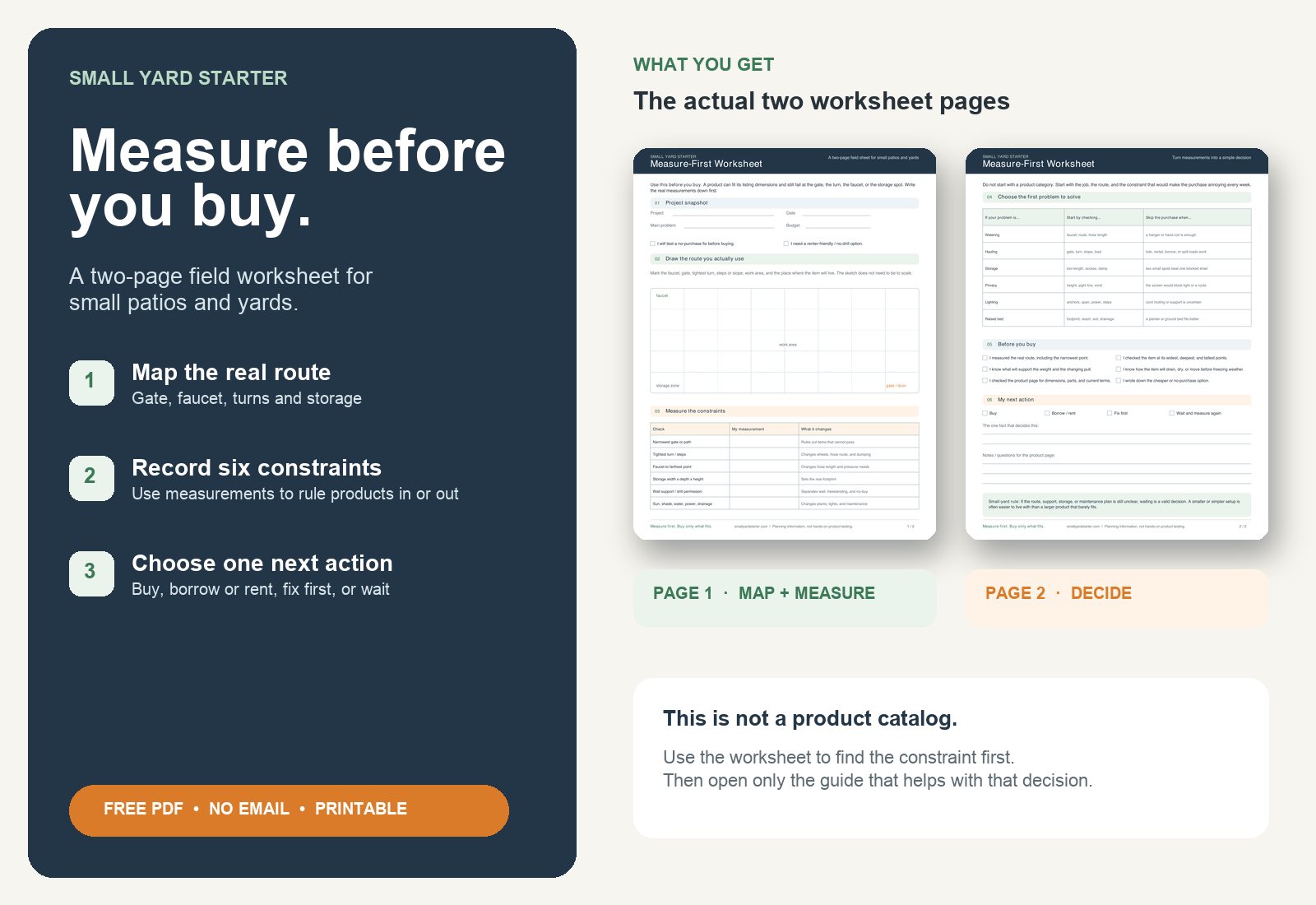
Use the two-page Measure-First Worksheet.

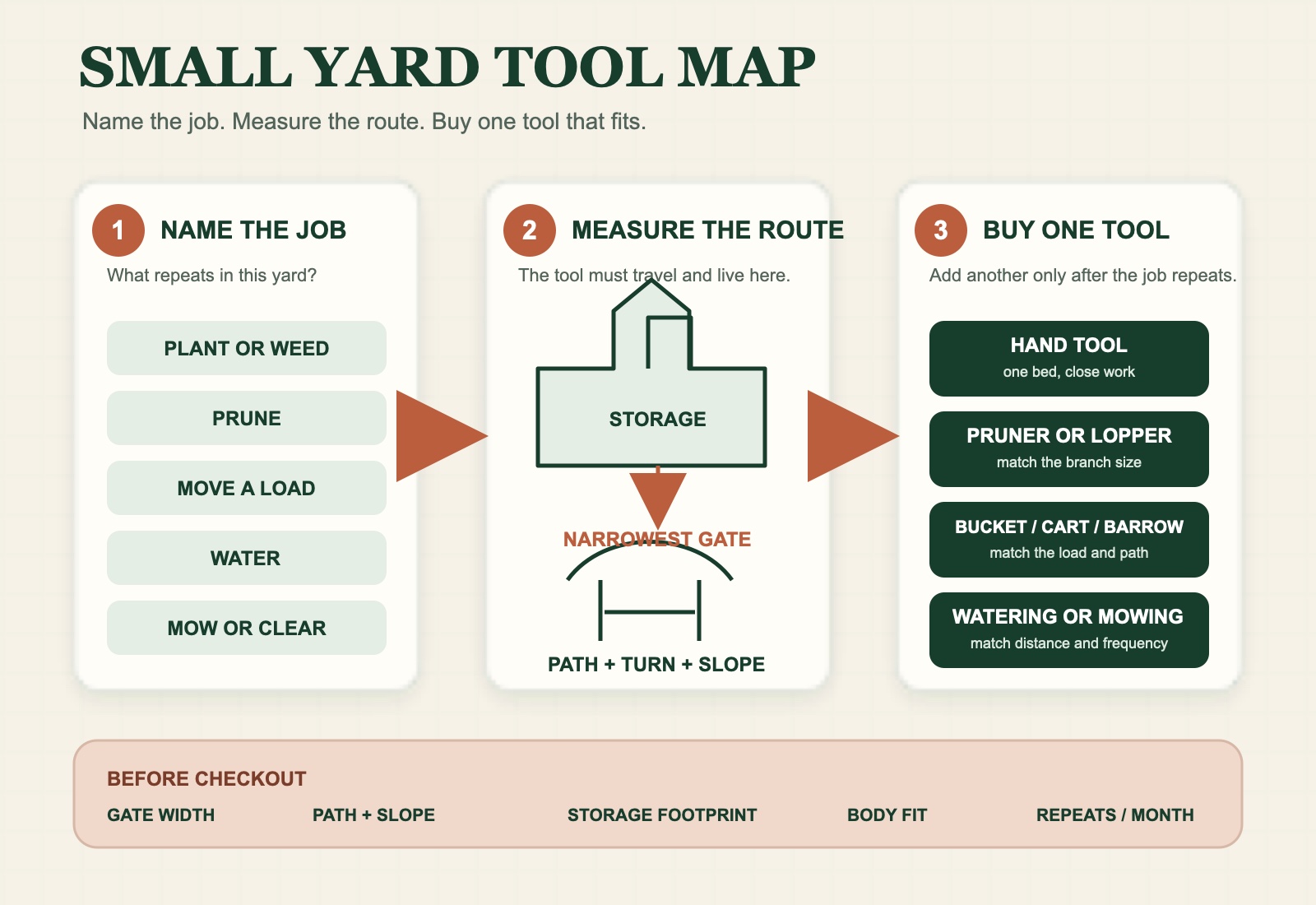
Page one gives you a route sketch and six measurements. Page two turns those notes into one of four next actions: buy, borrow or rent, fix first, or wait and measure again.

Preview of the two-page Small Yard Measure-First Worksheet showing a route sketch, six constraints, a before-you-buy checklist, and four possible next actions.
Preview of both printable pages. Download the PDF to fill in the route, measurements, and next action by hand.

Planning information, not hands-on product testing. The worksheet does not ask for an email address.

A short yard audit

Record the facts that a product photo leaves out.

A listed width tells you whether an item fits the final spot. It does not tell you whether the box clears the gate, the cart makes the turn, the hose reaches the bed, or the lid opens without blocking the path.

1. Draw the fixed pointsMark doors, gates, faucets, outlets, drains, steps, downspouts, trees, and anything you cannot move.

2. Trace the real routeFollow the path from delivery or storage to the place where the item will be used. Record the narrowest point and tightest turn.

3. Watch the conditionsNote where sun, shade, wind, standing water, and dry soil appear. Check more than once instead of judging from one moment.

4. Name one repeated problemChoose the job that keeps making the yard harder to use. Solve that before buying decor or starting a second project.

The six constraints

Measure what can stop the project.

Write the smallest usable measurement, not the largest open area. Include handles, cranks, lids, door swings, and space needed to stand beside the item. On a phone, swipe the table sideways.

What to record before you choose a product or layout
Constraint Record What it changes Pause when
Gate and path Narrowest clear width and any low overhead point Delivery, furniture, carts, planters, sheds The item fits the yard but cannot reach it
Turn, steps, and slope Tightest corner, step count, and steep section Wheel count, load size, hose drag, safe carrying The route needs lifting or a turn you cannot make
Water route Faucet to farthest use point, including corners Hose length, watering method, rain barrel usefulness The line must cross a door, stair, or daily walkway
Stored footprint Usable width, depth, height, and opening space Reels, deck boxes, cabinets, tools, folded furniture A lid, crank, or door consumes the route
Support and permission Known structure, surface, anchors, and renter or HOA limits Wall-mounted, freestanding, weighted, or no-drill options You cannot identify what will carry the changing load
Site conditions Sun and shade pattern, wind, power, soil, and drainage Plants, lights, irrigation, material, and upkeep The purchase would hide a drainage or safety problem

Worked example, not a tested yard

A hose reel can fit the wall and still fail the route.

Imagine a faucet beside the back door, a garden bed 48 feet away, a tight chair corner, and a 24-inch-deep storage strip. The weekly problem is not hose length. It is a wet hose crossing the walking route after every use.

First test a simple hanger near the faucet. If hand-coiling is the repeated problem, compare a stable manual reel. Use a wall model only after the support and drill permission are clear. This is how one measurement changes the product category instead of merely changing the size.

Topic collections

Choose the collection by the first job, not by the product.

Each collection moves from the broad layout decision to a narrower comparison. Do not try to complete all four at once. On a phone, swipe the table sideways.

Four paths through the Small Yard Starter library
Collection Start here when Decide in this order First guide
Plan the whole space Several zones compete for the same small area Route, main use, budget, privacy, then lighting Build the measured yard plan
Water and grow Beds, containers, or watering keep causing work Sun and soil, plant area, water source, then equipment Compare watering methods
Store and move Tools, soil, mulch, or the hose block the route Item and load, route, access frequency, then storage Choose a storage format
Reduce weekly work Mowing, trimming, watering, weeding, or cleanup repeats Name the chore, remove its cause, test one small change Cut one recurring chore

Know where a worksheet stops.

The Royal Horticultural Society recommends mapping the garden's size, shape, existing elements, and sunlight before drawing a plan. EPA WaterSense also advises matching a landscape to soil, sun, wind, slope, intended use, and plant water needs. These checks help you ask better questions; they do not replace local drainage, structural, electrical, or permit advice.
In the United States, contact 811 Before You Dig before a project that breaks ground. For the planning methods behind this library, see the RHS garden planning guide and EPA WaterSense landscape resources.

Choose a starting point

What needs to work better first?

Pick one problem. Finish that decision before adding another product or weekend project.

Decision guides

All guides

Browse by the job you need to finish.

Garden Tools Garden Tools for Small Yards: What You Actually Need Start with one repeated job, measure the route and storage, and skip a universal starter set. Small Lawn Tools Lawn Mower for a Small Yard: Reel, Corded or Battery? Choose a mower by surface, gate, slope, power route, dry storage, and the full mowing routine. Beginner Yard Care Beginner Yard Care Checklist for First-Time Homeowners A practical first-yard shopping and maintenance checklist for new homeowners. Low Maintenance Yard Low-Maintenance Landscaping: 5 Ways to Cut Yard Work Use five practical layout changes to reduce trimming, watering, clutter, and hard-to-mow edges. Lawn Alternatives Clover Lawn vs Grass: Pros, Cons and a Smarter Test Compare mowing, traffic, water, weeds, pets, and when a mixed lawn is safer than full replacement. Raised Bed Garden Best Raised Garden Bed Kits for Beginners How beginners can choose a raised bed kit without overbuying. Watering Systems Drip Irrigation vs. Soaker Hose: Which Fits a Small Garden? Compare one-bed, multi-zone, and hand-watering options before buying tubing, emitters, or a timer. Small Backyard Ideas Small Backyard Ideas: A Practical Makeover Plan Under $500 Measure the space, solve one problem first, and keep the budget flexible instead of spending the full amount by default. Small Patio Ideas Small Patio Ideas on a Budget: 3 Layouts That Fit Choose a measured coffee, lounge, or dining layout and keep the walking route clear. Seasonal Yard Care What to Buy Before Your First Spring Yard Cleanup The first spring cleanup supplies a new homeowner should consider buying. Beginner Yard Care Weed Puller vs Herbicide: A Lower-Chemical Yard Cleanup Plan A lower-chemical comparison for dealing with weeds in a small yard. Watering Systems Garden Hose Storage for Small Yards: Reel, Box or Hanger? Trace the route, check the pull point, and skip a reel when a hanger will do. Low Maintenance Yard How to Build a Low-Maintenance Flower Bed in One Weekend A weekend flower bed plan built around fewer future chores.