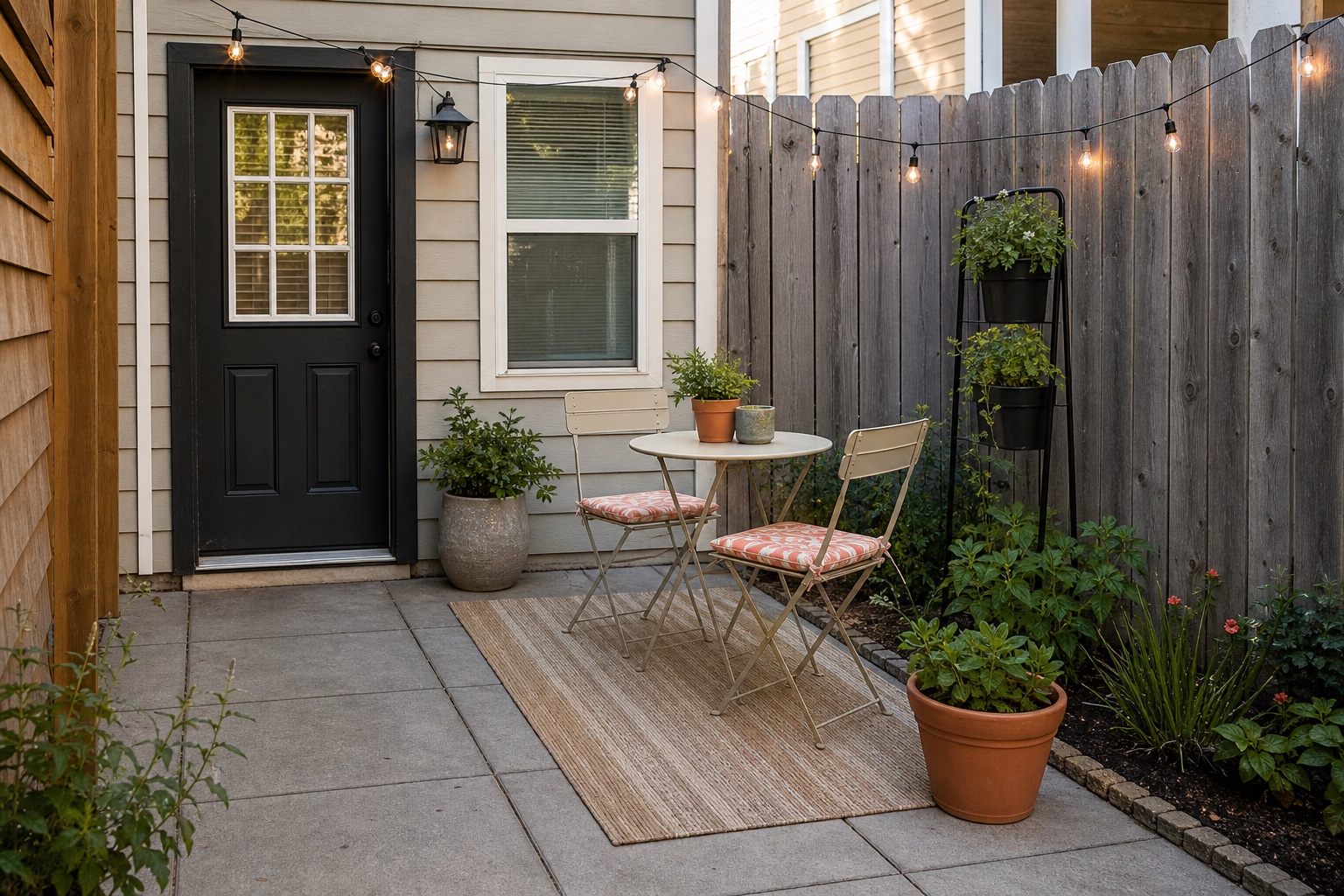
The best small patio idea is the one that still works after a person sits down, a chair moves back, the door opens, rain drains, and a tray crosses the space. A furniture set can fit the empty rectangle and still fail the used patio.
Start with one job: coffee, reading, dinner for two, a single privacy corner, or a small container garden. Then remove every part of the patio that is not usable floor: door swings, steps, grills, storage lids, wet corners, and planters that need a water route. The remaining rectangle is the layout, not the full slab size.
Community threads repeat the same failure from different angles: people ask for patio ideas while the real blocker is drainage, a wall corner that traps water, too many functions in one small rectangle, or planters that drip onto someone else's space. Treat those as fit problems before they become shopping problems.

The one-hour patio fit check
Use painter's tape, cardboard, boxes, or existing chairs. Do the check before opening product pages, because the product photo usually shows chairs tucked in and accessories staged at their best angle.
| Check | How to test it | Passes when | Wait when |
|---|---|---|---|
| One job | Name the most common use for the next month | One layout serves that use without moving three objects first | You are trying to seat, dine, garden, store, and screen at once |
| Usable rectangle | Subtract door swing, steps, grill zone, wet corner, and fixed planters | The remaining floor accepts the taped furniture footprint | The empty slab is large but the usable area is broken into scraps |
| Occupied seats | Pull chairs into real use and walk behind or beside them | No one must turn sideways to pass the normal route | A chair works only while tucked under the table |
| Water path | Check after rain or hose the slab lightly and watch the low spot | Water moves away from the house and away from rug or planter traps | Water stands under a future rug, box, planter, or chair leg |
| Storage and delivery | Measure the gate, doorway, lid swing, and place to put cushions | The item can arrive, open, dry, and be stored without blocking the route | The patio becomes the storage area for the thing you just bought |
Choose the layout by usable floor space
These dimensions are starting points for shopping mock-ups, not building-code approvals. Measure the rectangle that remains after unusable areas are removed, then test the route with people in the seats.
| Usable area | Best single use | Start with | Leave out |
|---|---|---|---|
| 6x8 feet | Coffee, reading, or two short meals | 24- to 30-inch round table and two folding chairs | Loveseat, coffee table, deck box, and extra stools |
| 8x10 feet | Lounging for two, or dining for two with plants | 48- to 60-inch loveseat or a small table with two everyday chairs | Sectional, full dining set, and many small pots |
| 10x10 feet | Meals for four if the route stays on one side | 36- to 42-inch table and four slim chairs | Second seating zone, six-chair set, and oversized planters |
Protect the route before placing furniture
- Mark the door swing. Open every nearby door and gate. Keep furniture, rugs, and planters out of that arc.
- Keep one continuous route. Aim for 36 inches where the patio is part of an accessible route. Use a wider route if turning, mobility aids, kids, or carrying trays make the path harder.
- Test occupied chairs. Pull the chair out to the way someone actually sits. Reduce the table or chair count if people must turn sideways.
- Check the delivery route. Measure the narrowest gate and doorway, then compare them with the product's assembled size and package size.
- Watch rain and sun. Note where water sits and how many hours of direct sun each planting or solar-light position gets.
The U.S. Access Board uses a 36-inch continuous clear width for accessible walking surfaces in covered facilities. A private home patio can be subject to different rules, so use that number as a conservative planning target and check local requirements when access is a concern.
Do the water check before the rug, box, or planter
A small patio often fails at the low corner. A rug hides standing water, a deck box traps it under the lid side, and a heavy planter can stain or overload a weak edge. After a rain, photograph the wet spots from the door and the yard. If you cannot wait for rain, hose the surface lightly and watch where water travels.
Do not create a patio plan that sends runoff toward the house, into a neighbor's space, or under a closed storage box. A serious slope or drainage problem is a repair question before it is a decorating question. For containers, choose pots with real drainage holes and a place for runoff to go; a saucer can protect the surface only when it is emptied before roots sit in stagnant water.
Layout 1: a 6x8-foot coffee patio
Best for: two people who want a place for coffee, reading, or a short meal. Put the table against the less-used edge when it is empty, but make sure both chairs can open without blocking the door.
A round bistro table avoids sharp corners in the route. Folding chairs earn their floor space because they can move inside or hang on a wall when the patio needs to stay open.
Do not buy: a three-piece set before checking the table diameter and chair depth. Product photos often show the chairs tucked in, not the space they use when occupied.
Compare: Compact two-seat bistro setsCompare on Amazon
Layout 2: an 8x10-foot lounge for two
Best for: reading, conversation, and putting your feet up. Place the loveseat on the longest solid edge. Use one side table that can move instead of a coffee table that sits in the route.
Measure seat depth as well as width. A 54-inch loveseat can still feel oversized when the cushions and back make it 32 inches deep. Leave the open side of the layout free for the route.
Do not buy: a sectional. The corner piece fixes the layout and usually consumes the exact turning space a compact patio needs.
Compare: Small outdoor loveseatsCompare on Amazon
Layout 3: a 10x10-foot dining patio
Best for: four people eating outdoors. A 36- to 42-inch round table is easier to walk around than a long rectangle in a square space. Keep the main route on one side instead of squeezing equal gaps around every edge.
Mock up the table first. Pull all four chairs into the occupied position. If the route disappears, use a smaller table, two everyday chairs, and two folding guest chairs.
Do not buy: a six-seat set because it is on sale. Two unused chairs take space every day and only help on occasional visits.
Buy in this order
- Seat the main use. Buy the table or seat only after the taped layout works.
- Fix exposure. Add shade or privacy only where sun or a sightline prevents use.
- Make the route visible. Add lighting to the step, gate, or table, not every edge.
- Add one soft layer. Use a rug only when it drains, lies flat, and clears the door.
- Add plants last. Choose containers by the light, water route, mature plant size, and filled weight.
Four finishing ideas that earn their space
A 4x6-foot rug for one defined zone
Use a rug to connect the front legs of a loveseat and side table or to sit under a small bistro set. Leave wet edges visible and keep the rug outside the door swing. Skip it when water pools on the surface.
Compare: 4x6 outdoor patio rugsCompare on Amazon
One tall planter instead of many small pots
Put one tall planter at the end of a sightline, not in the middle of the route. Check drainage and the weight after soil and water are added. A narrow planter is still a poor fit when the mature plant spills into the path.
Compare: Tall outdoor plantersCompare on Amazon
Privacy for the seated view
Sit in the usual chair and mark the one view that feels exposed. Buy the shortest screen that blocks that view without removing useful light or creating an unsafe wind load. The privacy screen guide explains bases, height, and sightlines.
One warm light line
Light the route first. Use string lights only when the patio has secure mounting points and a safe power or solar-panel position. The patio lighting guide separates path, task, and ambient light.
Affiliate links. As an Amazon Associate I earn from qualifying purchases.
Simple budget caps for one finished zone
These are planning caps, not current prices. Check the listing, shipping, return terms, and assembled dimensions before buying.
| Planning cap | Main job | Hold back |
|---|---|---|
| $150 | Improve furniture you already own with one rug, light, or planter | $30 for hardware, soil, or a return |
| $300 | Add compact seating for the chosen use | $60 for delivery, cover, or anchors |
| $500 | Seat one use, then solve one privacy or lighting problem | $100 until the anchor item fits |
What to skip on a small patio
- A sectional when the patio has only one clear furniture edge.
- A six-seat dining set for a household that normally seats two.
- A deep deck box that blocks the route when its lid opens.
- Planters without a water route, drainage plan, or mature-size check.
- A rug that hides standing water or curls into the doorway.
- String lights without secure anchors and a safe power plan.
- Any item that can arrive through the gate but has nowhere to dry, fold, or be stored.
Questions readers usually have
How do I make a small patio look good on a budget?
Choose one function and repeat two or three materials. A compact table, one useful light source, and two containers at the edge usually look more deliberate than many unrelated accessories.
What size table fits a 6x8-foot patio?
Start by mocking up a 24- to 30-inch round table with two chairs. Pull the chairs out and open the door before choosing the final size. The usable area can be smaller than the slab.
Should I buy furniture or privacy first?
Use an existing chair to locate the seating zone. If the sightline still makes the spot unusable, solve privacy first. Otherwise, buy the main seat before accessories.
How many plants fit without making the patio crowded?
Start with two containers at the outer edge of the layout. Add another only after the route, door swing, light, water, and filled weight still work.
Should I fix drainage before buying furniture?
Yes when water stands where the seat, rug, storage box, or planter would go. Solve the water path first so the patio does not become harder to use after the purchase.
Related guides
- Cheap backyard makeover plans under $500
- Low-maintenance backyard landscaping ideas
- Rain-barrel overflow and pressure checks
- Privacy screen ideas for small backyards
- Patio lighting options for small yards
- Outdoor storage ideas for yard tools
Sources and method
This guide uses the U.S. Access Board's accessible-route guidance for the 36-inch conservative route target, the Building America Solution Center patio-slope guidance for the water-away-from-house boundary, and Illinois Extension container-drainage guidance for the planter drainage rule. Community discussions at Houzz, Gardening & Landscaping Stack Exchange, Permies, and Screwfix were used to identify recurring fit and drainage questions. Those posts are anecdotes, not product tests or construction advice. Product details, prices, and availability can change. Verify the assembled size, return terms, mounting instructions, and local rules before buying. Read how Small Yard Starter puts guides together.