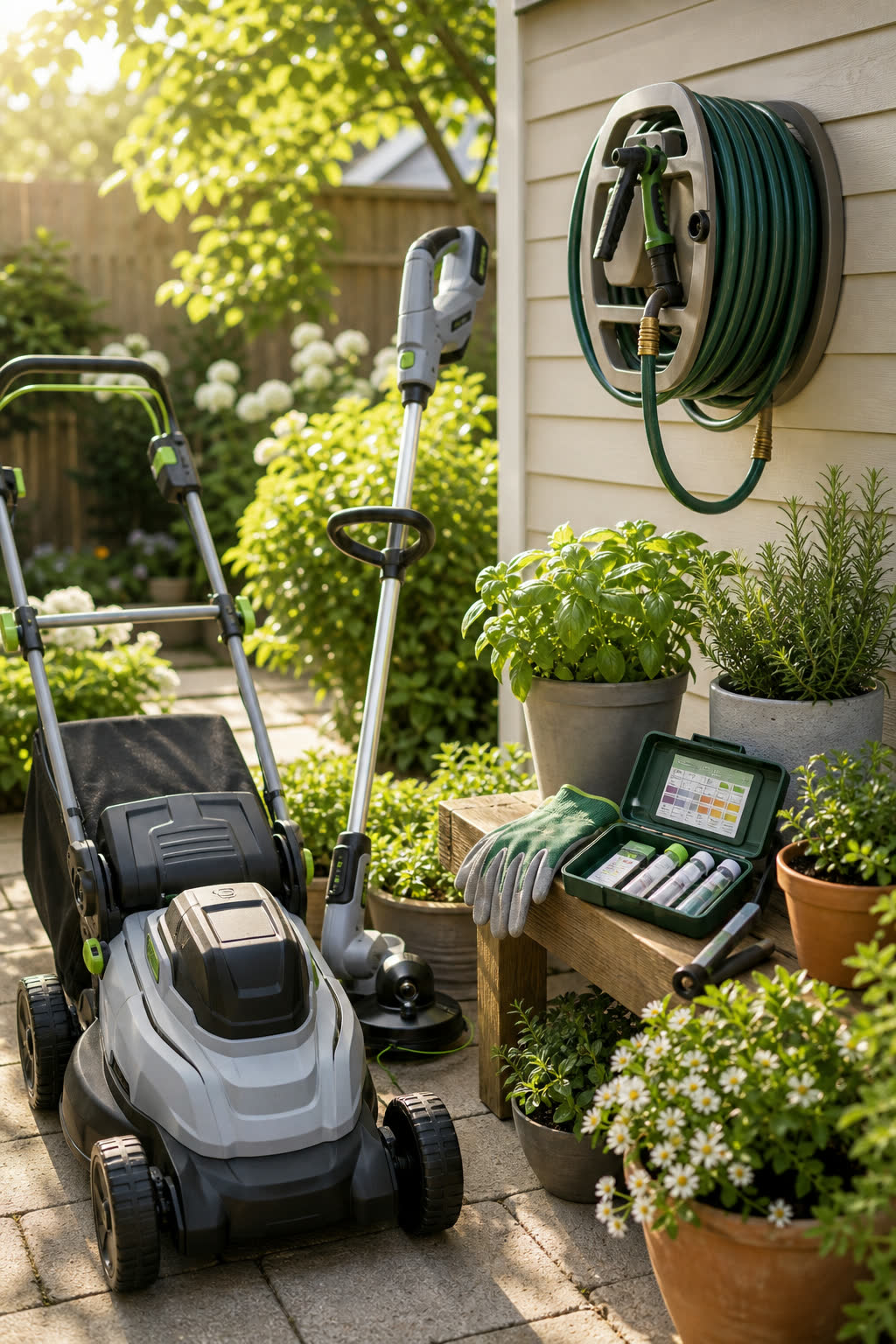
The direct answer: in a small yard, fall cleanup is a routing job before it is a tool job. Keep thin, dry leaves on turf only if your mower can shred them small enough that grass still shows. Move thick mats off the lawn, clear steps and drains before rain, keep only a light layer in beds, and follow local pickup or compost rules before filling every bag.
Small yards can receive a surprising amount of leaf volume because nearby trees drop into a tight area. That makes the common advice to simply "leave the leaves" incomplete. Some leaves should stay. Some should be chopped. Some should move to a bed or compost pile. Some need pickup because the yard has no safe holding area. The right choice depends on surface, depth, weather, and route.

Step 1: mark the places that cannot wait
Walk the yard after the first real leaf drop. Clear wet leaves from steps, patios, door thresholds, curb drains, basement entries, deck boards, and any path used after dark. These piles create slip, drainage, and access problems before they become a lawn problem.
Then mark the storage and disposal route: where a bag, tarp, cart, or mower bag has to turn; where pickup happens; and where leaves can sit without blocking the daily yard. If your municipality has a yard-waste rule, bag type, pickup date, or drop-off limit, check that before you create more piles than you can move.
Step 2: judge leaf depth, not yard size
A tiny lawn under maples can need more fall cleanup than a larger open lawn. Look down at the grass. If you can still see plenty of grass through a thin, dry layer, a mulching mower can chop leaves into small pieces that settle below the blades. If the lawn is mostly hidden, remove or relocate part of the layer before mowing again.
Wet leaves are a different job. They mat, drag, clog bags, and can tear soft turf if you pull a heavy tarp across it. Shift wet work to hard surfaces, wait for a drying window, or lift smaller batches to a bed, compost pile, or pickup bag.
What to do with each fall cleanup zone
Use the table before buying anything. On a phone, swipe sideways.
| Zone | Good first move | Tool that may fit | Pause when |
|---|---|---|---|
| Thin dry leaves on lawn | Mow often enough that chopped pieces fall between grass blades. | Your normal mower, possibly with a sharp blade and bag if volume builds. | Grass disappears under the leaf layer after one pass. |
| Thick leaf mats | Rake, bag, or move part of the pile before mulching the rest. | Leaf rake, tarp, mower bag, or small cart. | Turf is soft, the pile is wet, or the route crosses a slope. |
| Patio, steps, deck, drains | Clear before rain and before evening use. | Broom, light blower, rake, or gloved hand near drain grates. | The surface is icy, slick, unstable, or drains toward a building. |
| Planting beds | Keep a light insulating layer, but pull leaves away from crowns, labels, and access panels. | Hands, narrow rake, bucket, or shredded leaves from mowing. | Leaves bury small plants, hide markers, or trap water against stems. |
| River rock and gravel | Remove leaves before they break into debris that settles between stones. | Narrow rake, broom, or blower used away from water and neighbors. | Debris would be blown into a stream, drain, street, or another property. |
| Compost or leaf mold area | Shred first if you want faster breakdown, then keep the pile contained. | Mower bag, leaf shredder, bin, or corral. | The yard has no dry holding spot or the pile blocks access. |
| Curb pickup | Follow local bag, bin, bundling, and timing rules. | Paper yard bags, leaf scoop, tarp, or cart. | Pickup rules are unknown or wet weight makes bags unsafe to lift. |
Step 3: choose the leaf destination
There are four practical destinations for most small yards. First, mulch-mow thin leaves into turf. Second, move shredded leaves into beds as a seasonal cover where they do not bury crowns or block drainage. Third, build a contained leaf or compost pile if the yard has room. Fourth, use municipal pickup or drop-off when volume exceeds what the yard can use.
The destination decides the tool. If leaves can stay on site, a rake, mower bag, tarp, or small cart may be enough. If everything must leave the property, a big vacuum still has to empty into approved bags, bins, or a vehicle. Do not buy around the exciting part of the job and ignore the final twenty feet to storage or pickup.
Compare only the tool role your yard proves
These are shopping routes, not required purchases. Pick the role that removes the repeated bottleneck after the first cleanup pass. Verify current dimensions, weight, noise limits, power needs, bag rules, and storage before buying.
Leaf rake and scoop route
Use this route when leaves collect in corners, beds, around shrubs, or on a lawn too small for powered cleanup. Check handle length, rake width, storage height, and whether a scoop or pair of claws reduces bending without making the bag too heavy.
Compare: leaf rakes and leaf scoopsCompare on Amazon
Mulching mower route
Use your current mower first if the lawn is dry and leaves are not hiding the turf. The job is successful when chopped pieces settle into the grass and little leaf debris remains visible. If the mower bogs, leaves smear, or clumps sit on top, reduce depth before the next pass.
Compare: small-lawn mulching mower formatsCompare on Amazon
Light blower route
A light blower can make sense for patios, drains, steps, gravel edges, and dry leaves that need to move a short distance. It is a poor first purchase if the main work is wet mats, bag filling, or a disposal route with no landing zone. Check local noise rules and do not blow debris into drains, streets, waterways, or neighboring yards.
Compare: compact cordless leaf blowersCompare on Amazon
Bag, tarp, or cart route
Use this route when the problem is moving volume, not gathering it. A tarp is cheap but can become heavy and awkward on wet turf. Bags must match pickup rules. A cart helps only if it fits the gate, turn, slope, and storage spot. Use the cart vs wheelbarrow guide before buying a hauler for leaf season.
Compare: yard bags, tarps, and small cartsCompare on Amazon
Affiliate links. As an Amazon Associate I earn from qualifying purchases.
Common fall cleanup mistakes
- Leaving a blanket on the lawn. A thin chopped layer is different from a thick mat that blocks light and air.
- Buying a vacuum for a bagging problem. The machine still has to empty into something your pickup program accepts.
- Dragging wet tarps across soft turf. Split the load or wait for firmer conditions.
- Cleaning every bed bare. Some leaf cover can protect soil, but keep crowns, labels, drains, and access points visible.
- Ignoring the hard route. Wet leaves on steps and drains are more urgent than a thin scatter on grass.
- Starting a new project too late. Fall cleanup can expose bare soil, broken edging, or drainage problems. Record those for spring if weather or local rules make repair risky.
A two-weekend fall cleanup order
- Clear steps, doors, drains, patio edges, and the trash or pickup route.
- Photograph beds before leaves hide small plants, labels, irrigation, or access covers.
- Mulch-mow thin dry lawn leaves before they become a thick layer.
- Move heavy mats off grass in small batches, especially under dense tree canopies.
- Send clean shredded leaves to beds, compost, neighbors, or local pickup.
- Pull leaves out of gravel, rock edges, and drainage paths before they break down.
- Write the one bottleneck that remains: bending, hauling, storage, pickup timing, mower capacity, or hard-surface clearing.
Where to go next
If leaf season proves the mower is the bottleneck, compare small-yard mower formats before upgrading. If hauling is the hard part, use the yard hauler chooser. If leaves keep mixing with tools and cushions, solve outdoor storage. If the cleanup exposes a bigger weekly maintenance problem, step back to the low-maintenance yard audit. For the spring version of this process, use the first spring cleanup guide.
Sources and method
This guide uses community problem signals from Gardening & Landscaping Stack Exchange discussions about large leaf volume in a non-riding-mower yard and whether to rake leaves into woods or haul them away, plus GardenWeb/Houzz discussions about fall cleanup around hostas, whether a lawn vac solves leaf volume, and ways homeowners shred leaves. These are homeowner friction signals, not proof that one tool fits every yard.
Operational checks come from Iowa State University Extension fall lawn care, University of Maryland Extension lawn calendar, University of Delaware Extension leaf guidance, Virginia Tech leaf-management guidance, and the U.S. EPA home composting overview. Product details, local pickup rules, noise limits, and lawn timing vary; verify them locally before buying or applying anything.