Affiliate disclosure: This page may contain affiliate links. If you buy through these links, we may earn a commission at no extra cost to you.
The first month with a yard is awkward. You notice every weed. You do not know if the brown patch is a real problem or just a bad week of weather. A neighbor owns three loud tools, so it feels like you should own three loud tools too.
Slow down. Your first month is not for perfect landscaping. It is for learning what the yard repeatedly asks from you.
Quick answer
What to do in the first month
Walk the yard, find the water, watch where rain sits, solve storage, buy only the tools needed for this month's work, and repeat one short weekly routine. Save bigger projects until the yard has shown you its real problems.
From Pinterest?
Start with the 30-day plan, then pick tools.
If you landed here with a new house and a messy yard, use the first month to observe and stabilize. Do not buy fertilizer, plants, or specialty tools until you know what is actually happening outside.
- First week: inspect water, shade, weeds, drainage, storage, and hazards.
- Second week: buy the few tools that remove immediate friction.
- Third and fourth weeks: repeat a simple routine and choose one small improvement.
Week 1: Walk the yard before buying anything
Take one slow walk when the yard is dry and another after rain. The second walk is usually more honest. It shows puddles, mud, low corners, and places where water leaves soil or mulch behind.
- Find every outdoor spigot and check whether a hose can reach the lawn, beds, containers, and patio.
- Stand in the yard at morning, midday, and late afternoon to learn the real shade pattern.
- Look for unsafe branches, loose pavers, hidden holes, sharp debris, and broken edging.
- Notice the recurring job you already dread: mowing, weeds, watering, leaves, clutter, or bare spots.
- Choose one storage spot before tools start living in random corners.
If you want a printable version of this first walk, use the first-time homeowner yard care checklist.
Week 2: Buy the useful starter tools
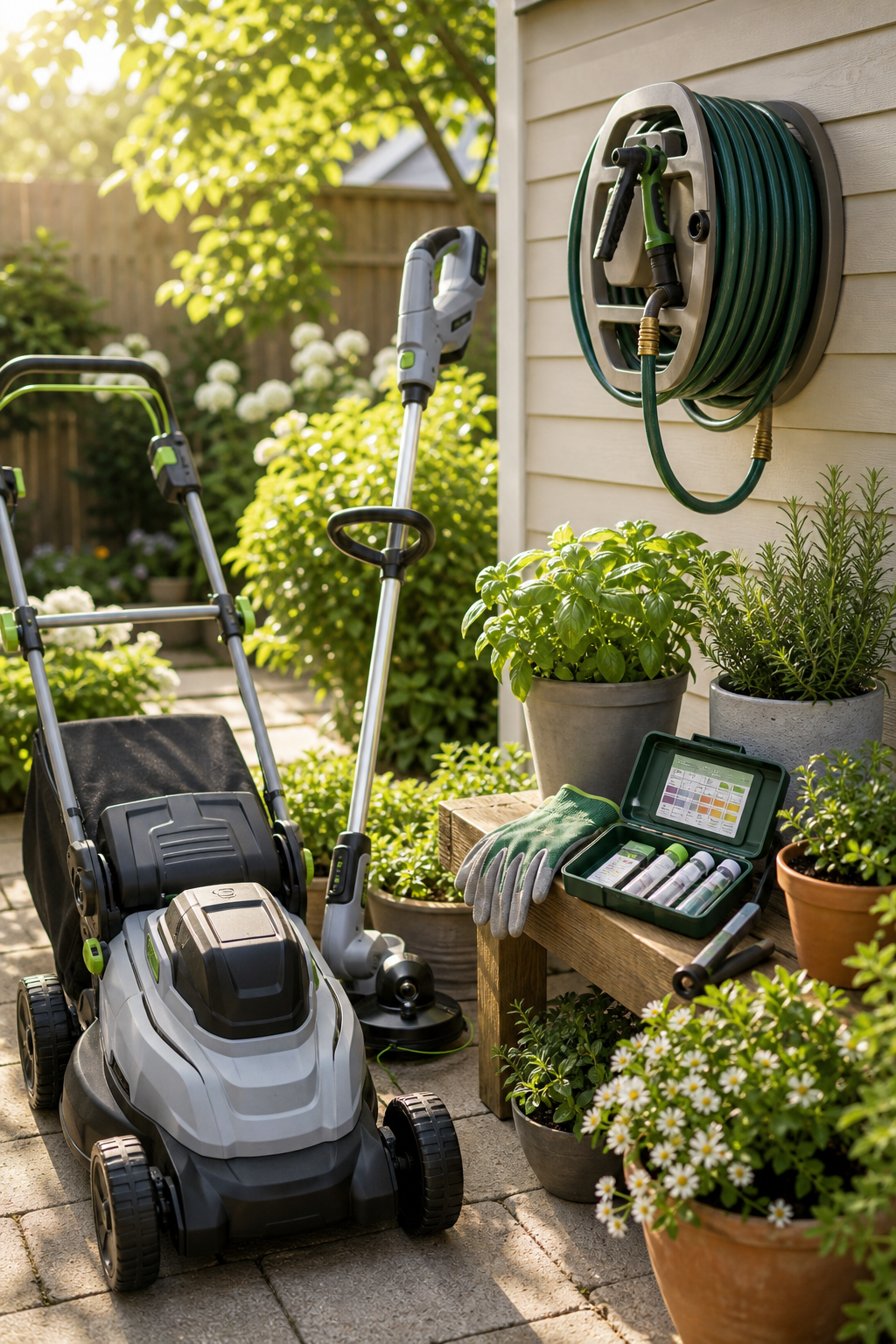
This is the week to buy the boring things that make the next three months easier. The goal is not a full shed. The goal is fewer excuses to avoid a 20-minute chore.
Buy first
- Work gloves that fit well.
- A hose setup that reaches the places you actually water.
- A mower or string trimmer if the yard has turf.
- Hand pruners for small dead stems and light cleanup.
- A soil test kit before fertilizer or seed.
- A simple deck box, hook rail, or outdoor cabinet.
Usually wait
- Fertilizer before you test the soil.
- Major irrigation parts before you know the zones.
- Multiple raised beds before one bed is easy to water.
- Full lawn replacement before trying a small patch.
- Decor that does not fix shade, storage, water, or seating.
Starter products to compare
These are category shortcuts, not final product verdicts. Measure the yard, check storage, and buy the smallest setup that solves the current job.
Shopping shortcuthose reel or hose storageChoose the style after measuring the farthest watering spot.Compare options
Shopping shortcutsoil test kitUse it before buying fertilizer, seed, or amendments.Compare options
Shopping shortcutcordless string trimmerCheck weight, battery ecosystem, and how much edging you really have.Compare options
Shopping shortcutoutdoor deck boxGood enough for gloves, nozzles, pruners, small bags, and quick cleanup.Compare options
Week 3: Run one weekly loop
Now stop adding new plans for a few days. Run the same small routine once or twice. A routine tells you whether your tools and storage are working.
- Mow only if the grass needs it.
- Trim the edges that make the yard look neglected.
- Pull the obvious weeds before they seed.
- Water new plants deeply, not lightly every day.
- Put every tool away before going inside.
That last step sounds tiny. It is not. A yard feels much less annoying when the next job starts with opening a box instead of hunting for gloves.
Week 4: Pick one small improvement
By the fourth week, one problem will be louder than the others. Choose that one. Do not choose five.
- If the hose is always in the way, fix hose storage.
- If the grass is patchy, test soil and read the clover lawn vs grass guide before changing the whole lawn.
- If the yard feels unfinished, try one defined area from the small backyard makeover shopping list.
- If watering already feels like a chore, compare drip irrigation vs soaker hose.
- If weeds are the headache, start with the weed puller vs herbicide plan.
The first-month rule
Buy what makes the next yard chore easier. Wait on everything else.
A new yard has a way of making every problem feel urgent. Most are not. In the first month, your job is to learn the pattern: water, shade, weeds, storage, safety, and the chore that keeps coming back. Once you know that pattern, the right purchases are much easier to see.
Frequently Asked Questions
What should a new homeowner do in the first month of yard care?
Inspect the yard first, learn the watering and drainage problems, buy only the starter tools needed for current chores, set up simple storage, and repeat a short weekly routine.
Should a new homeowner buy yard tools before moving in?
Buy only the obvious basics before moving in. Wait on fertilizer, specialty tools, irrigation upgrades, extra beds, and lawn changes until you have watched the yard for a few weeks.
How much yard work should a beginner plan for each week?
Most small yards can start with one short weekly loop: mow if needed, trim edges, pull obvious weeds, water new plants deeply, and put tools away.